 +91-8980395663
 info@njhospital.co.in
 Hanspura, Ahmedabad, Gujarat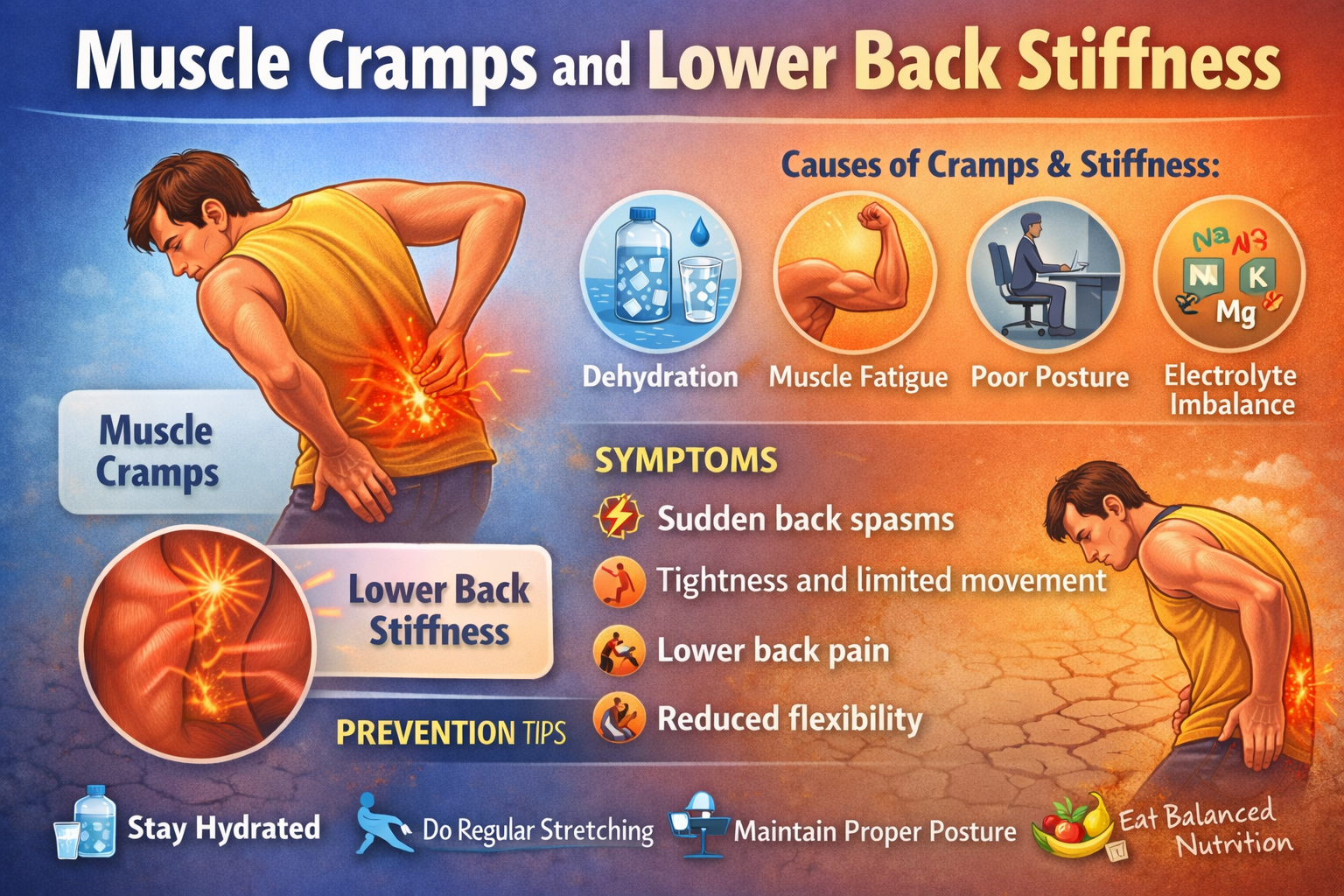
Muscle Cramps and Lower Back Stiffness: Causes, Symptoms, and Prevention
Muscle cramps and lower back stiffness are common problems that many people experience, especially during hot weather or after long periods of physical activity. These conditions can cause discomfort, restrict movement, and affect daily activities if not managed properly. Understanding the causes and taking preventive measures can help maintain a healthy and flexible spine.
What Are Muscle Cramps?
Muscle cramps are sudden, involuntary contractions of the muscles that can cause sharp pain and tightness. These cramps may occur in different parts of the body, including the lower back. They are often temporary but can be uncomfortable and sometimes interfere with normal movement.
Understanding Lower Back Stiffness
Lower back stiffness refers to a feeling of tightness or difficulty moving the muscles and joints in the lower spine. It may make bending, standing, or turning difficult and can sometimes be accompanied by mild to moderate pain.
Common Causes of Muscle Cramps and Lower Back Stiffness
Several factors can contribute to muscle cramps and stiffness in the lower back, including:
1. Dehydration
Lack of proper hydration can affect muscle function and lead to cramps and stiffness.
2. Muscle Fatigue
Overuse of back muscles during physical activities, heavy lifting, or exercise can cause fatigue and muscle tightness.
3. Poor Posture
Sitting or standing in incorrect positions for long periods can put extra strain on the lower back muscles.
4. Lack of Physical Activity
A sedentary lifestyle can weaken muscles and reduce flexibility, increasing the risk of stiffness.
5. Electrolyte Imbalance
Loss of essential minerals such as sodium, potassium, and magnesium due to sweating can trigger muscle cramps.
Symptoms to Watch For
People experiencing muscle cramps and lower back stiffness may notice:
-
Sudden tightness or spasms in the back muscles
-
Difficulty bending or twisting the body
-
Pain or discomfort in the lower back
-
Reduced flexibility and mobility
-
Muscle tenderness or fatigue
Tips to Prevent Muscle Cramps and Back Stiffness
Adopting healthy lifestyle habits can help reduce the risk of muscle cramps and stiffness.
-
Drink adequate water throughout the day to stay hydrated
-
Perform regular stretching and light exercises to maintain flexibility
-
Maintain proper posture while sitting, standing, or working
-
Avoid lifting heavy objects without proper support
-
Include balanced nutrition and electrolytes in your diet
When to Seek Medical Advice
If muscle cramps and back stiffness occur frequently, last for several days, or are accompanied by severe pain, numbness, or weakness, it is important to consult a healthcare professional for proper diagnosis and treatment.
Conclusion
Muscle cramps and lower back stiffness are common but manageable conditions. By staying hydrated, maintaining good posture, and keeping the body active, you can protect your spine and reduce discomfort. Taking small preventive steps can help ensure better spinal health and improved mobility in everyday life.