 +91-8980395663
 info@njhospital.co.in
 Hanspura, Ahmedabad, Gujarat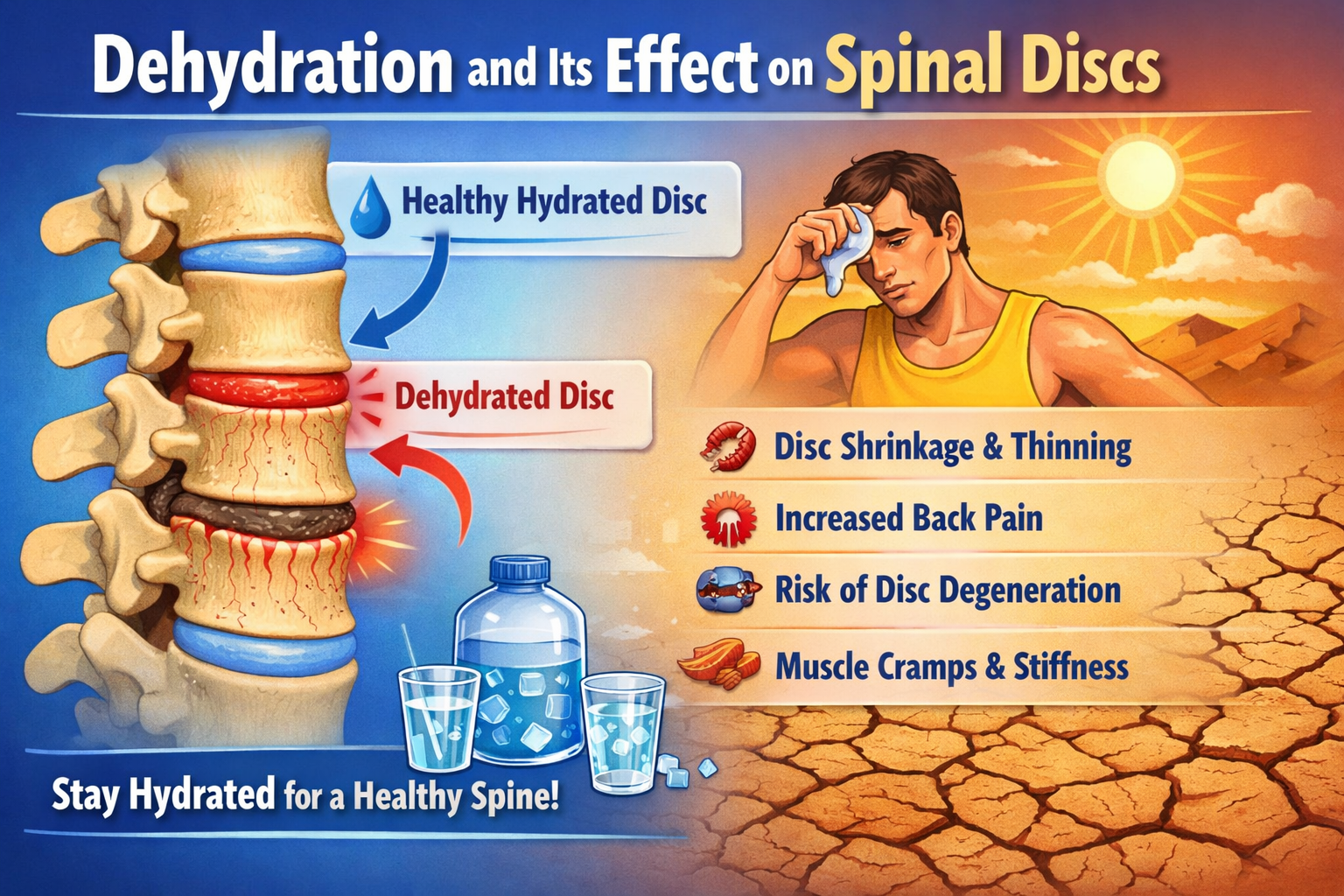
Dehydration and Its Effect on Spinal Discs
During the summer season, many people experience increased body fatigue, muscle stiffness, and back pain. One of the most common yet often overlooked reasons for these problems is dehydration. Water plays a crucial role in maintaining overall health, especially for the spinal discs, which require proper hydration to function effectively.
Understanding Spinal Discs
Spinal discs are soft, cushion-like structures located between the bones (vertebrae) of the spine. These discs act as shock absorbers, helping the spine remain flexible and protecting it from sudden movements, pressure, and impact.
A large portion of spinal discs is made up of water, which allows them to stay flexible and maintain their shape. When the body is properly hydrated, these discs remain healthy and can effectively support the spine during daily activities such as walking, bending, and lifting.
How Dehydration Affects Spinal Discs
When the body does not receive enough water, spinal discs may begin to lose their fluid content. This can lead to several problems, including:
1. Reduced Disc Flexibility
Dehydration can make spinal discs less flexible, which reduces their ability to absorb shock and movement.
2. Increased Risk of Back Pain
When discs lose hydration, they become thinner and less effective at cushioning the vertebrae. This can result in increased pressure on the spine and cause back pain.
3. Higher Risk of Disc Degeneration
Chronic dehydration may contribute to the gradual degeneration of spinal discs over time, increasing the risk of conditions such as slipped discs or herniated discs.
4. Muscle Stiffness and Fatigue
Lack of water can also affect surrounding muscles and tissues, causing stiffness, cramps, and discomfort in the back.
Signs That Dehydration May Be Affecting Your Spine
Some common signs include:
-
Persistent lower back pain
-
Muscle cramps or stiffness
-
Fatigue and reduced flexibility
-
Increased discomfort after physical activity
If these symptoms occur frequently, dehydration could be one of the contributing factors.
Tips to Maintain Proper Hydration for Spine Health
Maintaining good hydration habits can help protect spinal discs and support overall spine health.
-
Drink 8–10 glasses of water daily, especially during hot weather.
-
Increase water intake if you are physically active or exercising.
-
Eat water-rich foods such as fruits and vegetables.
-
Avoid excessive caffeine and sugary drinks, as they can contribute to dehydration.
Conclusion
Proper hydration is essential for maintaining the health and function of spinal discs. During the summer months, when dehydration is more common, it becomes even more important to drink enough water and take care of your spine.
By staying hydrated and maintaining healthy lifestyle habits, you can help reduce the risk of back pain and support long-term spinal health.